Home » Crawl Space Encapsulation Cost Calculator
Janesville Crawl Space Encapsulation Cost Calculator: 2026 Pricing Guide
Vented dirt crawl spaces in Janesville trap summer humidity and winter frost, causing rotting floor joists, musty odors, and high energy bills. Left unsealed, damp ground air rises into your living room through the natural stack effect.
Our Janesville Crawl Space Encapsulation Cost Calculator delivers instant 2026 pricing for 20-mil sealed vapor barriers, closed-cell spray foam, and commercial dehumidifiers across Rock County. Estimate your clean crawl space investment below in seconds.
2026 Rock County Pricing
Crawl Space Encapsulation Cost Calculator
Enter exact square footage:
sq ft
800 Sq Ft
Itemized Crawl Space Encapsulation Breakdown
Estimated Turnkey Investment
$7,160
Quote Range: $6,444 – $8,019
Unit Rate: $8.95 / sq.ft
Footprint: 800 Sq Ft
Vapor Barrier
Dehumidifier
Sump & Insulation
1. Sealed Vapor Barrier & Prep (800 sq ft)Ground leveling, drainage underlayment & tape-welded seams$5,060
2. Foundation Wall & Rim Joist InsulationThermal boundary insulation sealing cold floor drafts+$1,250
3. Sealed Crawl Space Sump Pump StationCast-iron submersible pump with airtight gasketed basin+$1,150
4. Commercial Energy Star DehumidifierLow-temperature automated humidistat & gravity drain+$1,350
5. Airtight Insulated Access Hatch DoorWeatherstripped entry door blocking outside humidity+$375
6. Complete Encapsulation Package SavingsTurnkey bundle credit for combined barrier & conditioning-$400
Need Janesville Crawl Space Encapsulation?
Janesville Basement Waterproofing provides free crawl space moisture audits across Janesville & Rock County, WI.
2026 COST BREAKDOWN GUIDE
How to Calculate Crawl Space Encapsulation Cost Step-by-Step
Understanding the materials and conditioning equipment required for crawl space encapsulation ensures you can evaluate quotes with complete transparency. Professional encapsulation is calculated using this square-footage and component-based formula:
MODULAR PRICING FORMULA
Total Cost = [ (Sq Ft × Base Rate × Vapor Grade) × Regional Index ] + Insulation + Sump Pit + Dehumidifier + Hatch – Credits
Step 1: Calculate Crawl Space Footprint & Ground Prep Base
Technicians clear sharp rocks and debris from the crawl space earth, re-grade high spots, lay heavy-duty geotextile drainage underlayment padding over uneven soil, and mechanically pin the heavy vapor barrier 6 to 12 inches up the foundation walls.
- Base Encapsulation Rate: $5.50 per square foot.
- Southern Wisconsin Regional Multiplier: 1.15x (calibrated for local Janesville specialty insulation labor and equipment transport).
- Effective Base Vapor Barrier Rate: $6.325 per square foot.
- Minimum Mobilization Threshold: $1,800.00 for compact crawl space footprints under 300 sq ft.
Step 2: Select Vapor Barrier Mil Thickness & Antimicrobial Grade
Vapor barrier mil thickness dictates puncture resistance, longevity, and odor blocking:
- 12-Mil Reinforced Polyethylene (0.90x Multiplier): Cost-effective scrim-reinforced vapor barrier suitable for crawl spaces with infrequent access and light storage.
- 20-Mil Antimicrobial Heavy-Duty Liner (1.0x Multiplier): Industry gold standard. Multi-layer virgin polyethylene infused with antimicrobial additives that resist tears from crawling, boots, and tools.
- 25-Mil Heavy Industrial Composite Liner (1.20x Multiplier): Ultra-rugged puncture-proof membrane engineered for high-activity crawl spaces, rough gravel soils, or active homeowner storage.
Step 3: Foundation Wall & Rim Joist Thermal Insulation
Insulating crawl space walls turns the space into a conditioned zone within your home’s thermal boundary:
- No Wall Insulation ($0 Base): Suitable if the home's subfloor ceiling already has intact batt insulation.
- 2" Closed-Cell Spray Foam Insulation (+$1,250): Applied continuously along perimeter foundation walls and band joists. Provides R-14 thermal insulation, creates an airtight vapor seal, and eliminates cold floor drafts.
- Thermal R-15 Rigid Foam Batts (+$850): Class A fire-rated polyisocyanurate or foil-faced mineral wool batts mechanically fastened to foundation block walls.
Step 4: Sealed Sump Pit & Mechanical Drainage Station
Groundwater seepage under the liner must be mechanically evacuated before water can pool:
- No Sump Pump ($0 Base): For dry crawl spaces with zero history of standing water or high seasonal water tables.
- Sealed 1/3 HP Submersible Sump Station (+$1,150): Cast-iron submersible pump installed in a heavy-duty perforated basin with an airtight, gasketed lid that prevents humidity and radon from escaping.
- Dual-Pump Station with Marine Battery Backup (+$2,150): Primary AC pump paired with an independent secondary DC pump and AGM battery for 24/7 protection during severe storms.
Step 5: Commercial Dehumidifier & Airtight Access Hatch
- Commercial 70-Pint Energy Star Dehumidifier (+$1,350): Engineered specifically for low-temperature crawl space operation (down to 40°F), with automated digital humidistats and continuous gravity drainage.
- Commercial 100-Pint High-Capacity Dehumidifier (+$1,850): For large footprints over 1,200 sq ft or areas with severe humidity loads.
- Airtight Insulated Access Hatch Door (+$375): Custom weatherstripped exterior or interior access door preventing warm outside air from undermining crawl space climate control.
Step 6: Complete Encapsulation Turnkey Savings Credit
Complete System Package Savings (-$400): Homeowners installing a complete turnkey system (vapor barrier plus dehumidifier or sump pump) receive an automatic $400 equipment bundle discount.
ROCK COUNTY ENGINEERING
Key System Features & Local Benefits
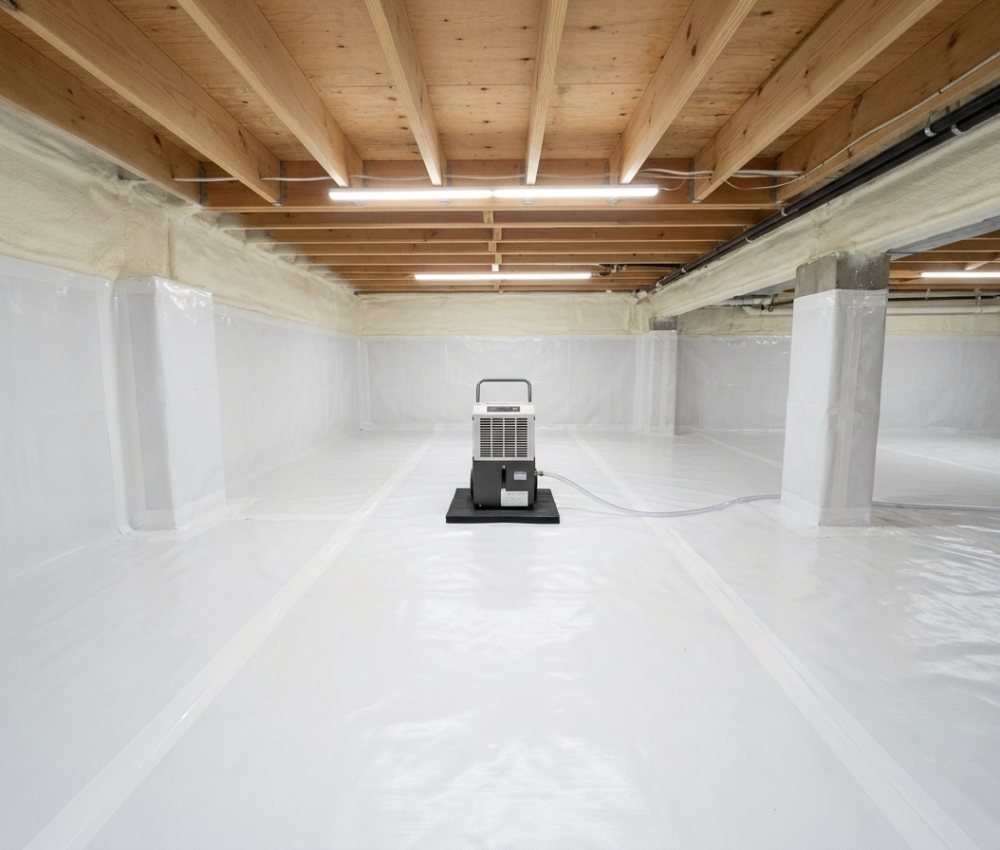
100% Puncture-Resistant Sealed Vapor Barrier
High-performance 20-mil antimicrobial virgin polyethylene liner pinned to foundation walls and tape-welded at every seam to block ground moisture permanently.
Closed-Cell Spray Foam Thermal Air Sealing
R-13 to R-20 closed-cell spray foam seals rim joists and foundation walls, eliminating cold drafts and reducing home heating/cooling costs by up to 20%.
Commercial Automated Dehumidification & Sump Defense
Dedicated self-draining crawl space dehumidifiers and sealed submersible sump pits maintain humidity below 55% year-round to stop mold dead.
Significantly Improves Indoor Air Quality
Neutralizes musty odors, stops wood-destroying fungi, blocks radon gas, and eliminates pest habitat under your living room.
JANESVILLE, WI 53545 (ROCK COUNTY)
Transform Your Janesville Crawl Space into Dry, Clean Usable Space
Eliminate Musty Odors, Stop Mold, and Lower Energy Bills Today.
Don’t let high humidity, rotten floor joists, or mold spores beneath your subfloor compromise your family’s health and home value. Janesville Basement Waterproofing delivers engineered crawl space encapsulation solutions featuring multi-layer 20-mil liners, closed-cell spray foam, and commercial low-temp dehumidifiers. Every encapsulation includes thorough mold cleaning, laser-measured grading, and a transferable lifetime warranty.
- Licensed & Insured
- Class A Fire Rated Materials
- 25-Year Liner Warranty
- Free On-Site Moisture Audit
HOMEOWNER GUIDE
Frequently Asked Questions
How much does crawl space encapsulation cost in Janesville, WI?
In Janesville and Rock County, complete crawl space encapsulation typically ranges between $5,000 and $15,000, with the average 800-to-1,200 sq. ft. home costing approximately $6,500 to $9,500. On a per-square-foot basis, expect to pay $5.50 to $11.00 per square foot depending on liner thickness (12-mil vs. 20-mil antimicrobial), soil debris removal, whether closed-cell spray foam insulation is applied to foundation walls, and whether mechanical equipment (sump pumps, commercial dehumidifiers) is required.
Why do vented crawl spaces fail in Southern Wisconsin?
For decades, building codes incorrectly assumed foundation vents allowed damp air to escape. In Janesville’s climate, the opposite happens: during hot, humid summer months, outdoor air entering foundation vents carries heavy humidity. When that warm air hits the cool, 55°F crawl space environment, it cools immediately. Cold air cannot hold as much moisture as warm air, causing relative humidity to spike over 80% to 90% and condensing liquid water droplets directly onto wood floor joists, fiberglass batts, and metal ductwork. Encapsulation seals the vents permanently, preventing outdoor humidity from ever entering.
How much money can crawl space encapsulation save on heating and cooling bills?
According to the U.S. Department of Energy and Advanced Energy studies, encapsulating and conditioning your crawl space can reduce heating and cooling costs by 15% to 25% annually. In Southern Wisconsin’s cold winters, cold unconditioned crawl spaces turn floors into giant heat sinks, forcing your furnace to run continuously. Sealing rim joists with closed-cell spray foam stops draft infiltration, keeps hardwood floors warm, and eliminates thermal loss through subfloor heating ducts.
Will encapsulation eliminate musty odors and mold on the first floor?
Yes. Due to the “Stack Effect,” warm air rising through your home draws up to 50% of your first-floor breathing air directly from the crawl space. If your crawl space contains damp soil, rotting wood, or mold colonies, those airborne spores, dust mites, and earthy odors migrate up into your living room and bedrooms. Sealing the earth with an airtight 20-mil antimicrobial vapor barrier and maintaining relative humidity below 55% with a commercial dehumidifier starves mold of moisture and permanently eliminates musty odors.
What routine maintenance is required after encapsulation?
Encapsulated crawl spaces are low-maintenance systems, but annual checkups ensure optimal performance:
1. Dehumidifier Air Filter: Wash or replace the MERV-8/11 air filter on your commercial dehumidifier every 6 to 12 months.
2. Sump Pump Float Switch: Test the sump pump float switch twice a year (especially in early spring) to verify immediate activation.
3. Relative Humidity Check: Inspect the digital remote humidistat to confirm humidity remains between 45% and 55%.
4. Visual Inspection: Annually check the perimeter liner tape and door seals to ensure seals remain airtight.